
E-Commerce
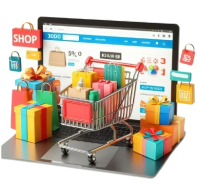
E-commerce, or electronic commerce, refers to the buying and selling of goods and services over the internet. It has revolutionized the retail landscape, enabling businesses to reach customers globally and allowing consumers to shop from the comfort of their homes
The Growth of E-Commerce
- Market Expansion
E-commerce has experienced exponential growth over the past few years, driven by technological advancements, increased internet penetration, and changing consumer behaviors. The global e-commerce market is projected to reach trillions of dollars, indicating its importance in the economy
- Consumer Convenience
With busy lifestyles, consumers increasingly prefer the convenience of online shopping. E-commerce platforms offer 24/7 access to products and services, easy navigation, and flexible payment options.
Types of E-Commerce
- Business to Consumer (B2C)
B2C e-commerce involves businesses selling products directly to consumers. This is the most common form, exemplified by online retailers like Amazon and Walmart
- Business to Business (B2B)
B2B e-commerce involves transactions between businesses, such as manufacturers and wholesalers. This model often focuses on bulk orders and long-term contracts.
- Consumer to Consumer (C2C)
C2C e-commerce enables consumers to sell products to each other, typically through online marketplaces like eBay and Etsy. This model fosters community and user-generated content.
- Consumer to Business (C2B)
C2B e-commerce, individuals offer products or services to businesses. This includes freelance platforms like Upwork and Fiverr, where individuals provide services to companies.
Benefits of E-Commerce
Global Reach
E-commerce allows businesses to access a global customer base, expanding their market potential beyond local boundaries.
Lower Operational Costs
Running an online store can be more cost-effective than maintaining a physical storefront. E-commerce eliminates many overhead costs associated with traditional retail.
Personalized Shopping Experience
E-commerce platforms can utilize data analytics to provide personalized recommendations, improving the customer experience and increasing sales.
Flexible Payment Options
Online stores can offer various payment methods, including credit cards, digital wallets, and even cryptocurrencies, catering to diverse customer preferences.
Scalability
E-commerce businesses can easily scale operations to accommodate growth. They can expand product lines, target new markets, and adjust marketing strategies with relative ease.
Future Trends in E-Commerce
- Mobile Commerce
With the rise of smartphones, mobile commerce (m-commerce) is becoming increasingly significant. Optimizing e-commerce sites for mobile devices is essential for capturing this growing audience.
- Artificial Intelligence (AI)
AI technologies are enhancing customer experiences through personalized recommendations, chatbots for customer support, and predictive analytics for inventory management.
- Augmented Reality (AR)
AR is transforming the online shopping experience by allowing customers to visualize products in their environment. This technology is especially beneficial in sectors like fashion and home decor.
- Sustainability
Consumers are increasingly prioritizing sustainability. E-commerce businesses that adopt eco-friendly practices and transparent supply chains will likely attract more customers.
E-commerce is a transformative force in the retail industry, offering unparalleled opportunities for businesses and consumers alike. As technology continues to evolve, the landscape of e-commerce will adapt, presenting new challenges and opportunities. Embracing e-commerce is crucial for any business looking to thrive in the digital age, enabling them to connect with customers and grow in an increasingly competitive market.